
Myofunctional therapy, child through adult
Orofacial Myology
What is Orofacial Myology?
Orofacial Myology (OM) is the study of normal and abnormal use of the muscles of the tongue, lips, and face. These muscles can affect tooth alignment, speech, chewing, and swallowing.
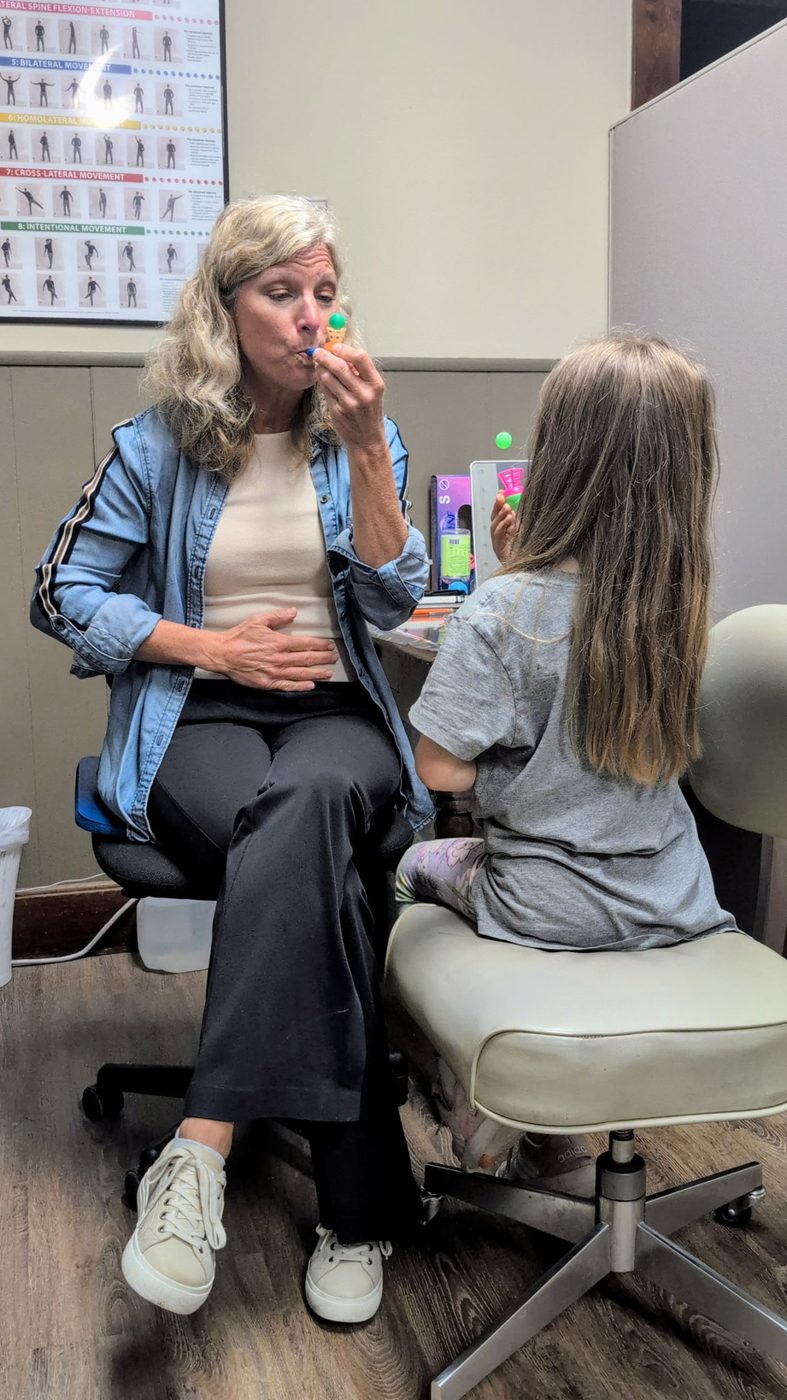
Orofacial myologists use myofunctional therapy, a set of specialized exercises that establish correct function of the tongue, lips, facial muscles, and jaw.
These exercises can greatly reduce or eliminate:
- Drooling
- Lip biting
- Food chewing problems
- Facial muscle imbalance
- Open-lips resting posture
- Abnormal tongue resting posture
- Articulation problems
- TMJ pain and dysfunction
- Tongue thrust
Many children suck their thumbs or fingers, bite their lips, or push their tongues against their teeth when swallowing or speaking. Over time, these habits can create orofacial myofunctional disorders.
How common are OM disorders?
81%of children with speech and articulation problems
38%of the general population
Maul et al., 1999; Kellum, 1992
Is treatment necessary?
Every client is evaluated individually, especially when there are dental, medical, or speech concerns. The decision to treat should be made by a health professional with additional training in Orofacial Myology. When therapy is a good fit, it helps restore normal muscle function. In most cases, goals and strategies are set together with the client's dentist or physician as a team.
At what age should therapy begin?
Motivation matters more than age. Children as young as four can benefit from a diagnostic session to see whether I can help with thumb-sucking or other habits. Children around seven or eight are often ready for the complete program. Teens and adults of all ages can be treated successfully.
What causes an orofacial myofunctional disorder?
There is often no single cause. In many cases it is a combination of factors, including:
- Oral habits such as thumb or finger sucking, cheek or nail biting, and clenching or grinding the teeth
- Tongue thrust, which can move teeth and cause crowding or gaps, swallowing air, and jaw problems
- An open-mouth resting posture, often caused by chronic nasal airway problems such as enlarged tonsils and adenoids, allergies, asthma, or a deviated septum
- Structural differences, such as a short lingual frenum (tongue-tie)
- Neurological or developmental conditions such as Down syndrome or cerebral palsy
- A family tendency toward any of the above